
5 Tips for Buying Your First New Vehicle
Buying your first new vehicle is an important milestone. However, the number of models, trim levels, options and financing solutions available can...
Read moreElectrification now plays a major role in the Canadian automotive industry. However, there are significant differences between hybrid, plug-in hybrid and fully electric vehicles, particularly when it comes to operation, charging and everyday use.
The best choice does not depend solely on advertised fuel consumption. You should also consider your driving habits, access to charging, budget and the frequency of your longer trips. Here is what you need to know before choosing your next powertrain.
| Powertrain | Energy source | External charging | Best suited for |
| Hybrid | Gasoline and electricity | No | Drivers seeking greater efficiency without changing their habits |
| Plug-in hybrid | Gasoline and electricity | Yes, but gasoline remains available | Electric daily driving combined with occasional longer trips |
| Fully electric | Electricity only | Yes | Drivers who can recharge regularly at home or work |
A hybrid vehicle, often identified by the abbreviation HEV, combines a gasoline engine, one or more electric motors and a battery. This battery is smaller than the one found in a plug-in hybrid or fully electric vehicle.
The battery recharges automatically while the vehicle is being driven. In particular, the system recovers some of the energy generated during deceleration and braking. Depending on the vehicle and driving conditions, the electric motor can assist the gasoline engine or briefly move the vehicle without using gasoline.
A conventional hybrid never needs to be plugged in.
A hybrid powertrain can reduce fuel consumption, particularly in the city, where frequent slowing and braking provide more opportunities to recover energy. It also preserves the convenience of a gasoline vehicle: when the fuel tank is nearly empty, you simply stop and fill it.
This technology is particularly well suited to drivers who:
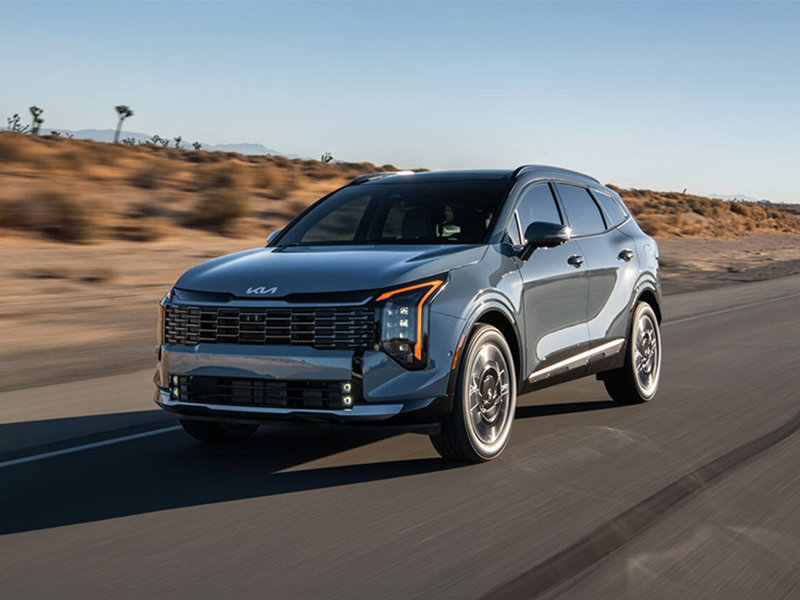
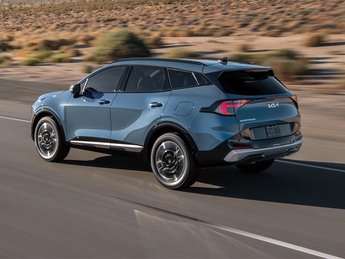
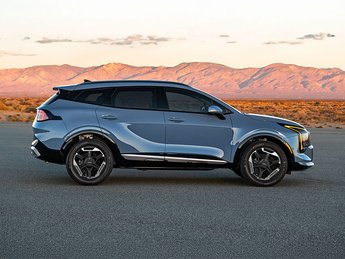
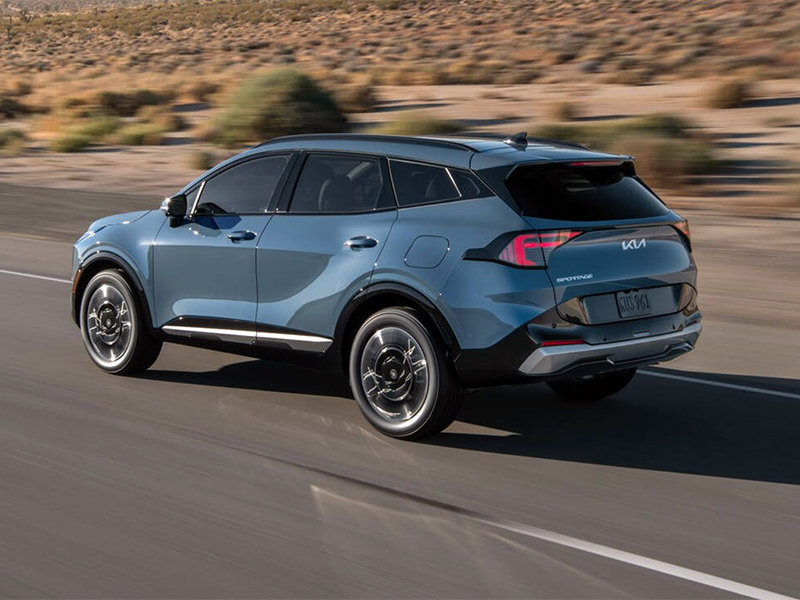
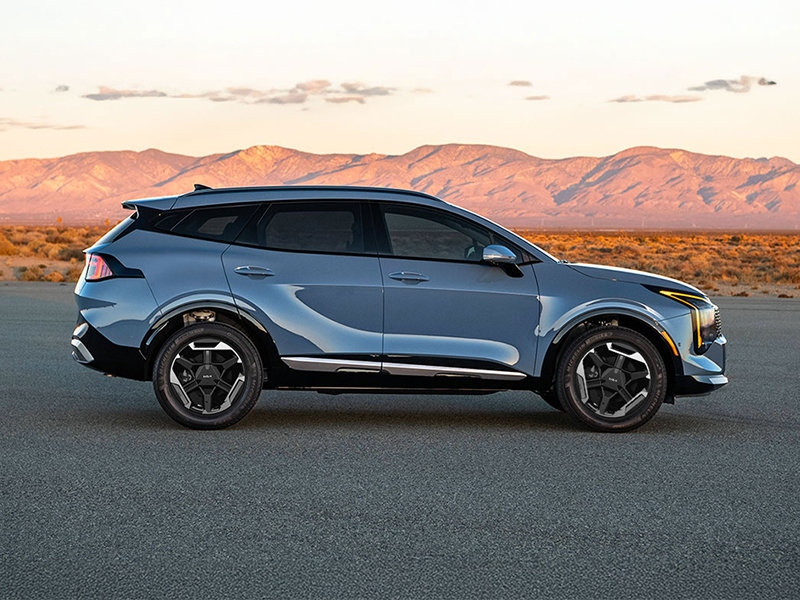
The 2026 Kia Sportage Hybrid combines a turbocharged 1.6-litre engine with an electric motor. It produces a combined 232 horsepower and has an advertised combined fuel consumption rating of 6.7 L/100 km.
The Mazda CX-50 Hybrid is another example of an electrified compact SUV that does not need to be plugged in.
There are also mild-hybrid systems, such as the one used in the Mazda CX-90 with its inline-six engine. In this case, a 48-volt system primarily assists the gasoline engine. The goal is to improve refinement, performance and efficiency rather than deliver extended electric-only driving.
The new 2026 Jeep Cherokee also features a hybrid powertrain combining a turbocharged 1.6-litre engine and two electric motors. Jeep announces a combined output of 210 horsepower, estimated combined fuel consumption of 6.3 L/100 km and a total driving range of up to 800 km. Because it is a conventional hybrid, it does not need to be plugged in.
A plug-in hybrid vehicle, or PHEV, follows the same general principle as a conventional hybrid but uses a larger battery. This battery can be recharged through an electrical outlet or charging station.
It allows the vehicle to travel several dozen kilometres without using its gasoline engine. Once the battery reaches its minimum charge level, the vehicle continues operating with its hybrid powertrain. There is no need to stop immediately and recharge.
For many drivers, a plug-in hybrid represents an appealing middle ground. Someone who travels 30 or 40 kilometres each day and recharges every night could complete most daily trips using electricity. On a trip between Montreal and Quebec City, however, the gasoline engine eliminates the need to plan every stop around a charging station.
The vehicle must be plugged in regularly to take full advantage of the technology. Without frequent charging, the driver is carrying a heavier battery without benefiting from its most important feature.
The Mazda CX-90 Plug-In Hybrid combines a 2.5-litre engine, an electric motor and a 17.8-kWh battery. It develops up to 323 horsepower and can travel up to 43 kilometres in electric mode, according to Mazda Canada. It then retains the versatility of a gasoline-powered, three-row SUV.
The Kia Sportage PHEV offers an advertised electric driving range of up to 53 kilometres. Its 13.8-kWh battery can be recharged in approximately two hours using a Level 2 charging station under ideal conditions.
Nissan also offers the new Rogue Plug-In Hybrid. According to Nissan Canada, it combines a 2.4-litre gasoline engine, two electric motors and three rows of seating. It demonstrates how plug-in hybrid SUVs are becoming increasingly practical for families.
An electric vehicle does not use a gasoline engine. A large battery supplies energy to one or more electric motors, and the vehicle must be plugged in to recover that energy.
The absence of an internal-combustion engine means there are no fuel stops or tailpipe emissions. Mechanical maintenance can also be simplified because there are no engine oil changes, spark plugs or exhaust system.
Models available in Canada include the Chevrolet Equinox EV and Blazer EV, Nissan ARIYA, Kia EV6 and Kia EV9. The EV9 stands out with its three rows of seating, making it one of the few fully electric vehicles designed for larger families.
For most owners, a residential Level 2 charger becomes the primary source of energy. The vehicle is plugged in at the end of the day and recovers its driving range overnight.
On the road, DC fast-charging stations can restore a significant amount of energy in less time. Actual charging speeds will vary according to the vehicle, charging station output, battery temperature and state of charge at the beginning of the session.
Cold weather increases the energy requirements of every vehicle. In an electric vehicle, heating the passenger compartment and managing battery temperature can reduce the available driving range. Charging may also be slower when the battery is extremely cold.
A plug-in hybrid may operate its gasoline engine more frequently in winter, even when there is energy remaining in the battery. A conventional hybrid will generally experience higher fuel consumption as well, just like a traditional gasoline vehicle.
It is therefore better to compare vehicles using a realistic winter scenario instead of relying exclusively on their performance under ideal summer conditions.
A hybrid may be the right choice if you cannot recharge at home or want a simple transition toward electrification.
A plug-in hybrid becomes particularly beneficial when its electric range covers most of your daily driving and you can recharge it regularly.
Finally, an electric vehicle can satisfy nearly every requirement if its driving range, charging capabilities and interior space match your lifestyle. The most important consideration is where you will recharge it most of the time.
Groupe Horizon’s dealerships allow you to compare different solutions from Mazda, Nissan, Kia, Jeep and Chevrolet. A test drive and a careful review of your regular travel habits remain the best ways to determine which technology truly suits your needs.
5 Tips for Buying Your First New Vehicle
Buying your first new vehicle is an important milestone. However, the number of models, trim levels, options and financing solutions available can...
Read more
5 Three-Row SUVs Perfect for Towing More Than 3,500 Pounds
A three-row SUV can serve as both a family vehicle and a capable tow vehicle. However, choosing the right configuration is essential because...
Read morePowered and developed by